Pug: Complete Breed Guide to Temperament, Health, and Care

Pug: Complete Breed Guide to Temperament, Health, and Care
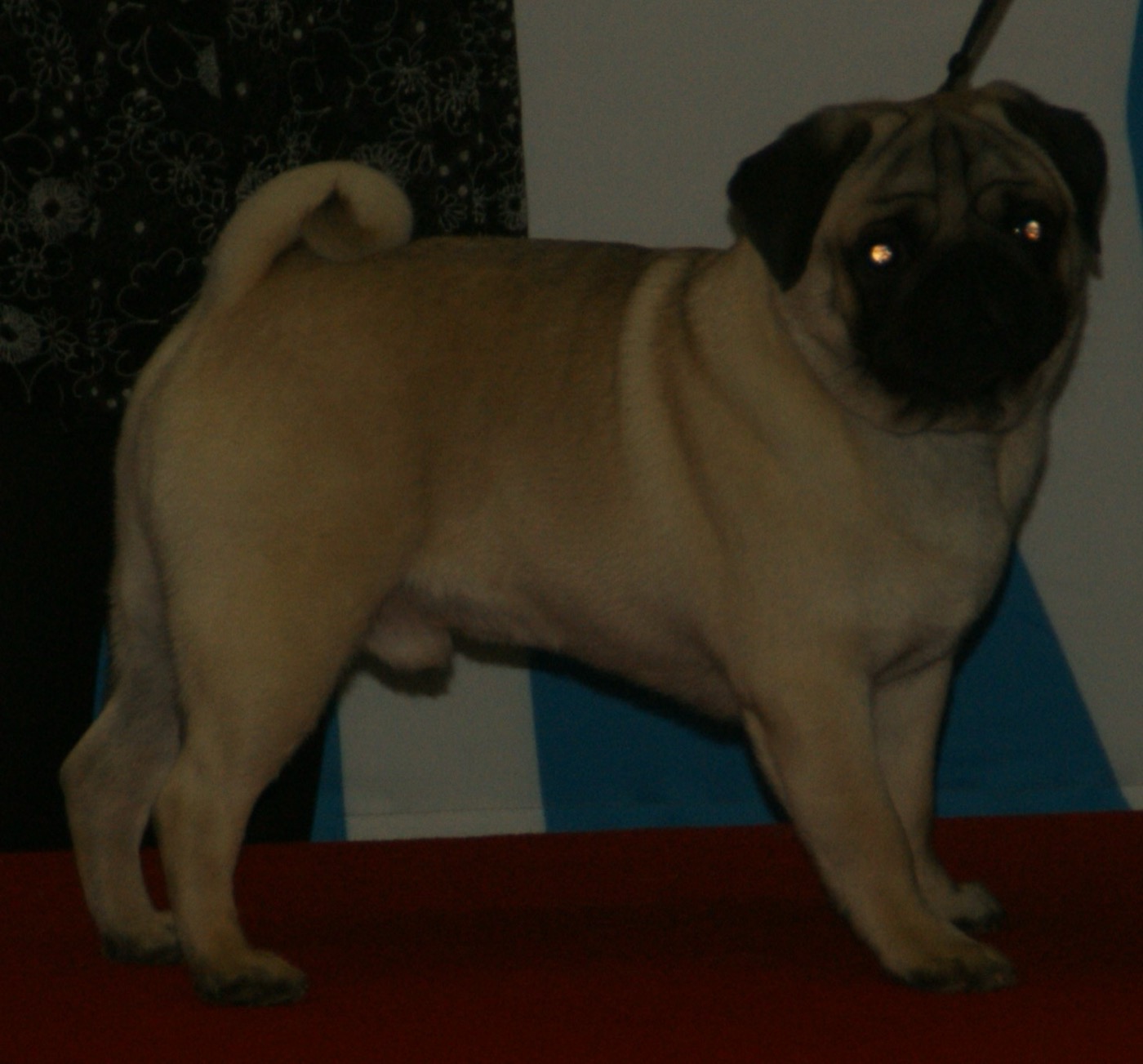
The Pug descends from the Lo-Sze, a dog popular in the Chinese imperial court during the Song dynasty, and was brought to Europe in the 16th century by the Dutch East India Company. The breed became an official dog of the House of Orange in 1572 after a Pug named Pompey reportedly saved the Prince of Orange’s life by alerting him to an assassination attempt.
Photo: Canarian / Wikimedia Commons, CC BY-SA 4.0
| Origin | Height | Weight | Lifespan | Energy Level |
|---|---|---|---|---|
| China | Not standardized precisely | 6.35-8.16 kg | ~7.65-12.8 years (varies widely by study) | Low to Moderate |
Executive Summary
The Pug is even-tempered and charming, bred purely as a companion for Chinese ruling families and later European nobility. It is famously devoted, often described as a “shadow” for how closely it follows its owner — but its brachycephalic build brings serious, well-documented health tradeoffs.
What Owning a Pug Involves
| With training & care | Without it |
|---|---|
| Charming, devoted companion that thrives on attention | Anxiety or distress when left alone too often |
| Careful weight management protects joints and breathing | Obesity, three times more likely in this breed than others |
| Regular airway monitoring catches breathing distress early | Undiagnosed brachycephalic airway obstruction |
| Climate-controlled environment prevents overheating | Heatstroke risk from restricted airway in hot weather |
3 Real-World Scenarios
- A prospective owner comparing brachycephalic breeds: researches the documented 64% hip dysplasia prevalence in Pugs before committing, alongside the breed’s breathing risks.
- An apartment dweller wanting a low-exercise companion: picks the Pug for its low-to-moderate energy needs and famously affectionate, people-focused temperament.
- A breeder managing whelping risk: plans for a likely Caesarean section, given the breed’s documented high predisposition to cesarean births.
2 Pug Facts
1. The Pug’s official association with Dutch royalty traces to one specific, documented incident in 1572: a Pug named Pompey reportedly alerted the Prince of Orange to an approaching assassin, after which the breed became the official dog of the House of Orange.
2. A hip dysplasia study found the condition in nearly 64% of Pugs tested — one of the highest documented rates of any breed, alongside a threefold higher obesity risk compared to dogs generally.
🐾 Try It: What Breed Does Your Dog’s Description Match?
Click through real physical traits and see how close your dog’s description comes to a Pug or another breed.
🐾 What Breed Is My Dog? Click the traits you see
Try it instantly — no sign-up. Watch the match bar grow as you go.
For fun and general guidance only — not a substitute for a professional breed evaluation or DNA test. Photo credits shown above each result.
How the Pug Compares to Other Breeds We’ve Covered
| Breed | Origin | Male Weight | Energy Level | Guarding Instinct |
|---|---|---|---|---|
| Rottweiler | Germany | 50-60 kg | High | Very high |
| Doberman Pinscher | Germany (1880s) | 40-45 kg | Very high | Very high |
| German Shepherd | Germany (1899) | 30-40 kg | Very high | High |
| Beauceron | France (1587) | 30-45 kg | High | High |
| Golden Retriever | Scotland (1868) | 29-34 kg | High | Low |
| Labrador Retriever | England (1903) | 29-36 kg | High | Low |
| French Bulldog | France (1898) | 9-14 kg | Moderate | Low |
| Poodle (Standard) | Germany/France | 20-32 kg | High | Low |
| Bulldog | England (1875) | ~25 kg | Low | Low |
| Beagle | England (1830s) | 10-11 kg | High | Low |
| Dachshund | Germany (1700s) | 7-15 kg | Moderate | Moderate |
| Yorkshire Terrier | England (1870s) | ≤3.2 kg | Moderate | Low |
| Boxer | Germany (1895) | 30-32 kg | High | High |
| Siberian Husky | Russia (Chukchi) | 20-27 kg | Very high | Low |
| Great Dane | Germany (1878) | 54+ kg | Moderate | Moderate |
| Chihuahua | Mexico | 1-3 kg | High | Low |
| Pug | China | 6-8 kg | Low | Low |
| Border Collie | UK (1893) | 14-25 kg | Very high | Low |
| Australian Shepherd | USA | 16-32 kg | Very high | Moderate |
| Shih Tzu | Tibet/China | 4-7.5 kg | Moderate | Low |
| Cocker Spaniel | England | 13-14.5 kg | High | Low |
| Cavalier King Charles Spaniel | UK (1944) | 5.4-8 kg | Moderate | Low |
| Miniature Schnauzer | Germany | 4-8 kg | Moderate | Moderate |
| Pomeranian | Germany/Poland | 1.4-3.2 kg | High | Low |
| Shetland Sheepdog | Scotland (1909) | ~9-11 kg | High | Moderate |
| Bernese Mountain Dog | Switzerland (1912) | 36-55 kg | Moderate | Moderate |
| Newfoundland | Canada | 65-80 kg | Moderate | Low |
| Akita | Japan (1931) | 27-59 kg | Moderate | High |
| Alaskan Malamute | USA (Alaska) | 34-39 kg | Very high | Low |
| Bull Terrier | England | Unstandardized | High | Moderate |
| Staffordshire Bull Terrier | UK (1935) | 13-17 kg | High | Moderate |
| Weimaraner | Germany (1891) | 30-40 kg | Very high | Moderate |
| Basset Hound | France | 25-34 kg | Low | Low |
| Bichon Frise | France/Belgium | ~5 kg | Moderate | Low |
| Maltese | Italy | 3-4 kg | Moderate | Low |
Weight and origin data from published breed standards; energy/guarding levels are general working-breed characterizations, not clinical measurements. See the full breed index for filters by size and origin.
Nutrition and Exercise
Pugs need only moderate exercise, but strict portion control matters given the breed’s well-documented threefold obesity risk, which further strains its already-compromised breathing. Heat and exertion should be carefully managed year-round given the brachycephalic airway.
10 FAQs
Where does the Pug come from?
How big does a Pug get?
Why do Pugs have breathing problems?
Is hip dysplasia common in Pugs?
How did the Pug become linked to Dutch royalty?
Are Pugs prone to obesity?
How long do Pugs live?
Do Pugs need a C-section to give birth?
Are Pugs good family dogs?
Is a Pug good for a first-time owner?
🎥 5 Best YouTube Videos About the Pug
These videos are embedded directly using YouTube’s own official embed player, in compliance with YouTube’s Terms of Service — we don’t host, own, or claim any credit for this footage. All rights remain with each video’s original creator; click a channel name below to visit their YouTube channel.
Dog Breeds 101 Video: Pug — by DogBreedsResource
Pug Dogs 101: Everything You Need To Know About This Breed — by PetMania
Pug 101: The FACTS You Need to Know! — by K9 of Mine
Top 10 Interesting Facts About Pugs | The Cutest Toy Dog – Dogs 101 — by Animal Facts
Pug Dog Breed Guide — by Dog Advice Videos
Dog Breed Guide Index: Every Breed We’ve Covered, Filterable by Origin, Size, and Age
French Bulldog: Complete Breed Guide to Temperament, Health, and Care
AI Dog Breed Photo Identifier: Upload a Photo, Get an Instant AI Match